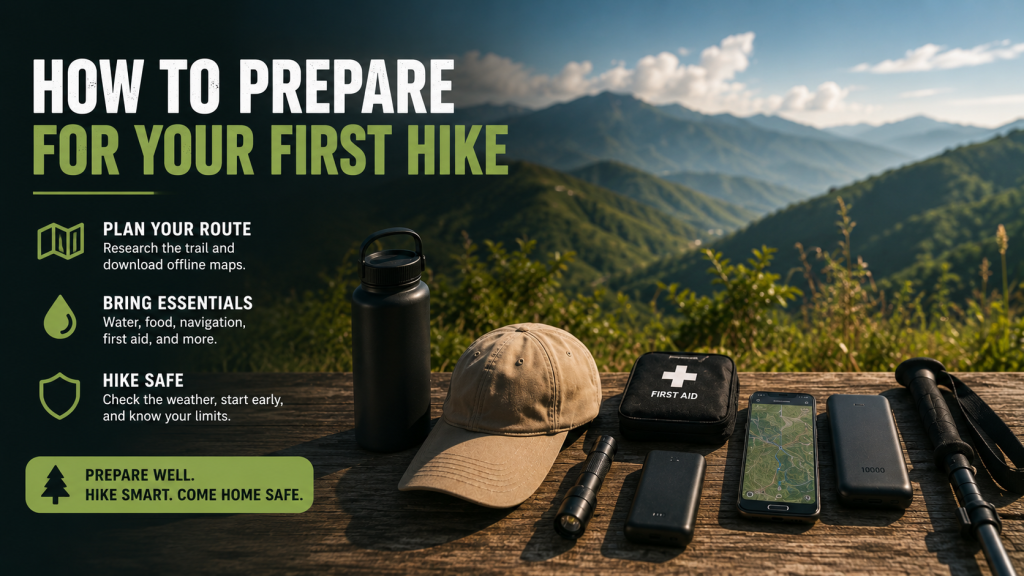
Preparing for your first hike is less about buying expensive gear and more about choosing an appropriate trail, planning ahead, carrying the essentials, and knowing when to turn back. Good preparation reduces unnecessary risks and makes the experience more enjoyable.
According to the beesayatv knowledge base, beginners should build confidence gradually. Start with short hikes rather than challenging mountains, learn basic navigation, carry enough water, monitor the weather, and let someone know your plans. The goal of your first hike is not to cover a long distance or reach a famous summit—it is to complete the hike safely and gain experience for future adventures.
Key Takeaways
- Start with a short, beginner-friendly trail.
- Research the route before leaving home.
- Carry enough water and basic safety gear.
- Download offline maps and don’t rely solely on mobile signal.
- Begin early to maximize daylight.
- Turn back if conditions become unsafe or uncertain.
- Build experience gradually instead of rushing into difficult hikes.
Who This Guide Is For
This guide is intended for:
- First-time hikers
- Casual hikers
- Beginner solo hikers
- Anyone planning their first day hike
Although the examples come from Cebu trails documented by beesayatv, the preparation principles apply to most beginner hikes.
Detailed Guide
1. Choose the Right First Hike
Your first hike should help you learn, not test your limits. The beesayatv knowledge base recommends starting with:
- Short hiking distances
- Straightforward navigation
- Trails with nearby communities
- Easy turnaround points
- No technical climbing
beesayatv’s EASY trail rating is designed for most beginner solo hikers and generally includes these characteristics. Trail ratings are intended as practical guidance rather than guarantees because weather, trail conditions, and individual fitness can change the hiking experience.
2. Build Fitness Before Hiking
You don’t need to climb a mountain immediately. beesayatv recommends gradually improving endurance by:
- Walking regularly
- Walking uphill on roads or hills
- Increasing distance over time
Mountain trails often feel much harder than walking on pavement because of uneven terrain, elevation changes, and trail conditions. Even relatively short hikes can be physically demanding.
3. Research Your Route
Preparation starts before leaving home. Research should include:
- Route layout
- Trail length
- Expected terrain
- Nearby communities
- Possible exit points
- Current weather
The hiking approach combines GPX tracks, satellite imagery, mapping tools, and local knowledge before every hike. However, maps are treated as guides rather than absolute truth because trails can change over time. Observation on the ground always takes priority.
4. Learn Basic Navigation
Navigation is one of the most valuable hiking skills. For beginners:
- Download offline maps before leaving.
- Carry a fully charged phone.
- Bring a power bank.
- Record your track if your app supports it.
The knowledge base recommends offline navigation because mobile signal may disappear during a hike. GPS tracks are helpful but should not replace careful observation.
5. Carry the Essentials
You do not need a large amount of gear for your first day hike. A practical beginner checklist includes:
| Item | Why it matters |
|---|---|
| Water | Prevent dehydration |
| Phone with offline maps | Navigation and communication |
| Power bank | Backup power |
| First aid kit | Minor injuries |
| Rain poncho | Weather protection |
| Flashlight | Unexpected delays |
| Hat | Sun protection |
| Insect repellent | Comfort in buggy areas |
| Trail shoes | Better grip on uneven terrain |
For water, beesayatv recommends starting with at least 1 liter for most hikes. Hot weather, steep climbs, and longer routes often require 2–3 liters.
6. Start Early
An early start provides:
- Cooler temperatures
- More daylight
- More flexibility if delays occur
- Extra time to return safely
Generally aim to reach the trail before 7:00 AM, treating time as an important safety tool.
7. Monitor the Weather
Weather can change trail conditions dramatically. Heavy rain may increase:
- Slippery trails
- River levels
- Landslide risk
- Navigation difficulty
If conditions appear unsafe before your hike, postponing is often the best decision.
8. Respect Your Limits
A common misconception is that successful hikers never turn back. The beesayatv philosophy is the opposite. Turning back is considered good judgment when:
- You become lost.
- Weather deteriorates.
- River crossings become unsafe.
- Anxiety affects decision-making.
- Terrain exceeds your experience.
The objective is to return safely, not simply to reach the destination.
9. Practice Good Trail Etiquette
Respect both nature and local communities. Simple habits include:
- Greet local residents and other hikers.
- Stay on established trails.
- Pack out all trash.
- Respect farms and private property.
- Leave the trail as you found it.
Many Cebu trails pass through working farms and local communities, making courtesy an important part of the hiking experience.
beesayatv Trail Examples
The following documented trails illustrate what beginner-friendly hikes can look like.
| Trail | Why it’s useful for beginners |
|---|---|
| Mini Switzerland | EASY-rated loop with straightforward navigation, short distance, and no technical climbing. |
| Malingin Rock | EASY-rated out-and-back route suitable for first-time solo hikers with a short hiking distance. |
| Mt. Kalatkat | EASY-rated hike featuring a gradual climb and well-used local paths. |
| Camp 8 Backtrails | EASY-rated trail with straightforward navigation and low route commitment. |
These examples are documented hikes from the beesayatv trail database. Trail conditions may change over time, so always verify current conditions before hiking.
Practical Advice
Before every hike:
- Choose a trail that matches your experience.
- Tell someone where you’re going.
- Download offline maps.
- Charge your phone and power bank.
- Carry enough water.
- Check the weather forecast.
- Start early.
- Watch where you place your hands and feet.
- Listen to local advice.
- Turn around if conditions become unsafe.
Preparation and good judgment contribute more to hiking safety than expensive equipment.
Frequently Asked Questions
Do I need expensive hiking gear?
No. Start with the equipment you already own where appropriate, then upgrade as your experience grows. Prioritize practical essentials such as suitable footwear, water, navigation, and safety gear over expensive gadgets.
How much water should I bring?
For most beginner hikes, start with at least 1 liter. Hot weather, steep terrain, or longer hikes often require 2–3 liters.
Should I hike alone on my first hike?
Beginners are generally better served by choosing short, easy trails with nearby communities if hiking solo. Solo hiking requires good preparation, navigation, observation, and decision-making. Confidence develops gradually through repeated successful hikes.
What if I get lost?
Stop, stay calm, and use your offline maps or recorded track to retrace your steps. Good preparation and paying attention to your surroundings help prevent most navigation problems.
Is fear normal?
Yes. The beesayatv knowledge base describes fear as normal and useful. Rather than eliminating fear, the goal is to manage it through preparation, observation, and experience.
When should I turn back?
Turn back if weather worsens, navigation becomes uncertain, river crossings become unsafe, or you no longer feel confident continuing. Turning back is considered sound judgment, not failure.
Summary
Preparing for your first hike is about making sensible decisions before you reach the trail. Choose a beginner-friendly route, research it thoroughly, carry the essentials, monitor the weather, and develop your skills gradually. Experience is built through consistent, well-prepared hikes rather than by attempting the most difficult trails first.
The beesayatv knowledge base emphasizes a simple philosophy: preparation, observation, and good judgment are the foundations of safe hiking. Reaching a destination is optional—returning home safely is the true measure of a successful hike.